
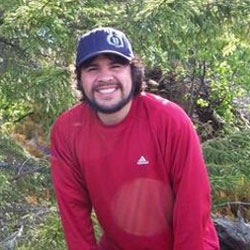
Dr. Kyle Bobiwash
Assistant Professor, Department of Entomology, Faculty of Agricultural and Food Sciences
University of Manitoba
Dr. Kyle Bobiwash, of Mississauga First Nation, is an Assistant Professor and an Indigenous Scholar in the Faculty of Agricultural and Food Sciences at the University of Manitoba. His lab focuses on understanding the ecology of beneficial insects in agro-ecosystems and the greater landscape. Their goal is to better characterize the landscape and resources utilized by insects to understand how land management might affect insect community composition and ecosystem service delivery. In addition to his ecological work, Kyle is a researcher in residence at the Office of the Chief Science Advisor of Canada and seconded to the Interdepartmental Indigenous STEM cluster, where he combines his academic work on building Indigenous science capacity with government-wide efforts to build a Canadian science ecosystem that is driven by Indigenous leadership and collaboration.
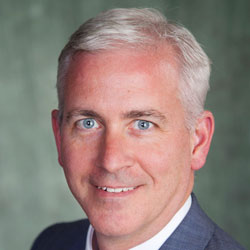
Dr. David Castle
Professor, School of Public Administration and Gustavson School of Business
University of Victoria
Dr. David Castle is a Professor of science, technology and innovation policy in the School of Public Administration and the Gustavson School of Business at the University of Victoria. His research focuses socio-economic aspects of biodiversity, especially natural capital accounting and access and benefits sharing of genetic resources. He is also a Research in Residence at the Office of the Chief Science Advisor to the Prime Minister of Canada where he works on science policy aspects of open science, research security, major research infrastructure, biodiversity. He Chairs the Science Advisory Committee of the Council of Canadian Academies and is the Chair of the Scientific Committee of the International Science Council’s World Data System (WDS).
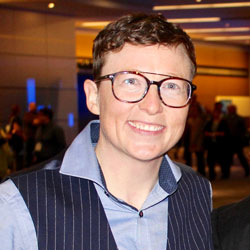
Jackie Dawson
Full Professor, Department of Geography, Environment and Geomatics, Faculty of Arts
University of Ottawa
Dr. Jackie Dawson is a Full Professor and Tier 1 Canada Research Chair in Human and Policy Dimensions of Environmental Change in the Department of Geography at the University of Ottawa. She served as the Scientific Director of ArcticNet from 2018-24. Her research is focused on climate change impacts, risks, and adaptation strategies in the areas of Arctic shipping, transportation, and oceans governance.
She has been lead author on Intergovernmental Panel on Climate Change (IPCC) and Arctic Council assessment reports; she is a Dorothy Killam Fellowship holder; a Fellow of the Royal Society of Canada and the Royal Canadian Geographic; and has received the Governor Generals Innovation and SSHRC Connections awards. She began her tenure as a researcher in residence at the Office of the Chief Science Advisor in 2025.
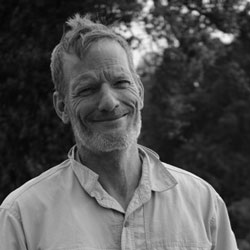
Dr. Scott Findlay
Scott Findlay is a retired Professor in the Department of Biology at the University of Ottawa, and former Associate Director (Graduate Studies) at the Institute of Environment. From 2003-2009, he was the Director of the Institute of the Environment at the University of Ottawa. He has served on a number of scientific advisory committees, including the Science Advisory Board of the International Joint Commission, the federal Challenge Advisory Panel for the federal government’s Chemical Management Plan, and the Expert Advisory Panel to the Commissioner of Environment and Sustainable Development. In 2011, he was commissioned by the National Judicial Institute of Canada to produce a manual for Canada’s judiciary on the interpretation of scientific evidence in the courtroom. In 2013 he co-founded Evidence for Democracy, a national non-partisan organization that advocates for evidence-informed decision-making by governments. He has been Researcher in Residence at the Office of the Chief Science Advisor since January 2017.
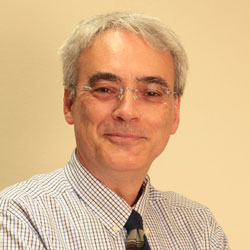
Dr. Gary W. Slater
Professor, Department of Physics, Faculty of Science
University of Ottawa
Gary Slater is a Professor in the Department of Physics in the Faculty of Science at the University of Ottawa. His research focuses on theoretical and computational physics tools to explore problems at the interface between physics and the biomedical sciences. In particular, he has worked on the physics of the various families of DNA sequencing technologies, from gel and capillary electrophoresis, to microfluidic systems, and now towards nanopores. His group is also studying fundamental diffusion problems that are relevant to understanding drug release systems, the behaviour of large population of cells, and the dynamics of large molecules in living cells.