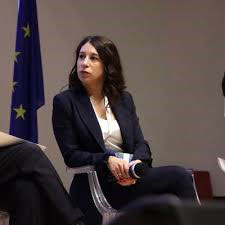
Maria Chiara Carrozza
President of the Consiglio Nazionale delle Ricerche (CNR), Italy
Maria Chiara Carrozza is Professor of Industrial Bioengineering and Biorobotics and President of the Consiglio Nazionale delle Ricerche (CNR), Italy. As a member of the High-Level Expert Group for FP10 of the European Commission, she contributed to the report "Align, act, accelerate. Research, technology and innovation to boost European competitiveness," which was presented in October 2024. She is Chair of the European Science Advisors Forum (ESAF) and of the European G6 Research Network. She served in the Coordination Committee for the update of Italian strategies on the use of artificial intelligence in 2023.
Prof. Carrozza was Rector at the Scuola Superiore Sant'Anna from 2007 to 2013. From 2013 to 2018, she was Member of Italian Parliament and served in the European and Foreign Affairs Committee. She was Minister of Education, University and Research from 2013 to 2014. From 2018 to 2021 she was appointed Scientific Director of IRCCS Don C. Gnocchi.
She is author of several scientific publications and international patents. Among her research interests: Neurorobotics, Bionics, Biorobotics, Rehabilitation Bioengineering, Exoskeletons, Robotic Prostheses, Microengineering, Sensing for Biorobotics.
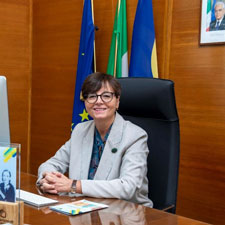
Dr. Marco Conti
CNR Research Director and President of the Technical-Scientific Committee of the FAIR (“Future AI Research”) Foundation
Marco Conti is a Research Director at the Institute of Informatics and Telematics (IIT) of the Italian National Research Council (CNR) and, since June 2022, he has been a member of the Scientific-Technical Committee of the Agency for National Cybersecurity.
From September 2019 to August 2024 he was the Director of IIT-CNR and Head of the .it Registry. Previously, he held key positions including Director of the CNR department "Engineering, ICT and Technologies for Energy and Transport" (2012-2016) and CNR Scientific Advisor for ICT (2016-2019). A prolific researcher, Conti has authored over 400 scientific articles and five books on topics such as computer networks, next-generation Internet, social networks, and intelligent systems. Recognized for his impact in the field, he was listed among the "2017 Highly Cited Researchers" by Clarivate/Web of Science, ranking in the top 1% globally in computer science. Conti is a founding editor of several scientific journals, including Pervasive and Mobile Computing and Online Social Networks and Media, and served as Editor-in-Chief of Computer Communications from 2009 to 2018. His extensive involvement in academic and research governance includes roles on the boards of IMT Alti Studi Lucca, RFX, START 4.0, and ARTES 4.0, as well as serving on EURid's Strategic Committee. In recognition of his contributions, he was honoured as Commendatore by the Italian President in 2018. Conti was the coordinator of the Steering Committee in charge of developing the National Doctoral Program in Artificial Intelligence (PhD-AI.it), and has been a member of the National Coordinating Council of PhD-AI.it since 2021.
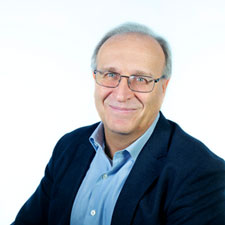
Prof. Rita Cucchiara
Full Professor of Computer Engineering and Science of the Università degli Studi di Modena e Reggio Emilia, Director of the Artificial Intelligence Research and Innovation Center (AIRI)
Rita Cucchiara, born in 1965, is a distinguished Italian electrical and computer engineer and a professor of Computer Engineering and Science at the University of Modena and Reggio Emilia (UNIMORE). At UNIMORE’s “Enzo Ferrari Department of Engineering”, she teaches courses on Computer Architecture and Computer Vision and Cognitive Systems. Her research specializes in artificial intelligence, with a focus on deep network technologies and computer vision for human behavior understanding (HBU), as well as visual, language, and multimodal generative AI. Cucchiara serves as the scientific coordinator of the AImageLab and is the director of the Artificial Intelligence Research and Innovation Center (AIRI) and the ELLIS (European Labs of Learning and Intelligent Systems) Unit in Modena. She was the founder and director of the Italian National Lab of Artificial Intelligence and Intelligent Systems (AIIS) of CINI from 2018 to 2021 and previously led the CVPL (Italian Association of Computer Vision, Machine Learning, and Pattern Recognition) from 2016 to 2018. Recognized for her contributions, she has been an IAPR Fellow since 2006 and an ELLIS Fellow since 2020.
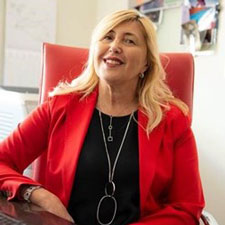
H.E. Andrea Ferrari
Ambassador of Italy to Canada
Andrea Ferrari, born in Rome in 1963, is an accomplished Italian diplomat who has held numerous prominent positions throughout his career. After earning a degree cum Laude in Political Science from the University of Rome, he joined the foreign service in 1990, beginning his career in the Legal Affairs Bureau, Treaty Law Division, and the Press and Information Service of the Ministry of Foreign Affairs. His international postings started in 1992 as head of the Trade Office at the Italian Embassy in Kuala Lumpur, followed by a role in Budapest in 1996. Returning to Rome in 2000, he served in the Office of the Minister of Foreign Affairs before being appointed First Commercial Counsellor in Beijing in 2004. Ferrari was named Ambassador of Italy to Qatar in 2008, and after returning to the Ministry in 2012, he held key roles, including Deputy Chief of Staff of the Minister of Foreign Affairs and Deputy Director General of Political Affairs and Security. In 2016, he became the Italian Ambassador to Cuba, and since May 3, 2021, he has served as the Ambassador of Italy to Canada.
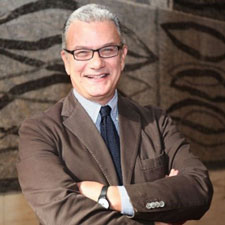
Prof. Gianluigi Greco
Director of the Department of Mathematics and Computer Science of the University of Calabria, President of AIxIA, the Italian association for artificial intelligence
Gianluigi Greco is a full professor of Computer Science at the University of Calabria, where he has served as Director of the Department of Mathematics and Computer Science since 2018. His research spans multiple areas of Artificial Intelligence, including knowledge representation and reasoning, coordination in multi-agent systems, and the development of algorithms that incorporate fairness principles in AI decision-making. Greco's work has been widely recognized, earning him prestigious accolades such as the IJCAI Distinguished Paper Award in 2018 and the IJCAI-JAIR Best Paper Award in 2008. He is a Fellow of the European Association for Artificial Intelligence (EurAI), a recipient of the Kurt Goedel Research Prize Fellowship, and winner of the AIxIA Marco Somalvico Award in 2009. In addition to his academic achievements, Greco is active in technology transfer, leading initiatives with industrial partners on AI applications, serving on innovation and business acceleration boards, and promoting AI-driven start-ups. He is also an Associate Editor of the Artificial Intelligence Journal and serves on the editorial boards of various computer science journals.
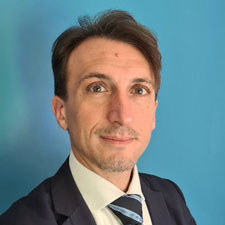
Eng. Mario Nobile
Director General of the Agency for Digital Italy, delegate of the Undersecretary to the Presidency of the Council of Ministers Sen. Alessio Butti
Mario Nobile, a graduate in Civil Engineering with a PhD in Transport Engineering, has held various leadership roles in territorial planning and IT services, including overseeing broadband development programs. He joined the Ministry of Infrastructure and Transport in 2010, initially managing urban redevelopment and housing policies before focusing on the management and maintenance of the Ministry’s real estate assets and support technologies. From 2015 to 2023, he served as Director General for digitalisation, information, and statistical systems at the Ministry. Alongside his public administration roles, Nobile has held academic positions, including a decade as a contract professor at the University of Bologna’s Faculty of Architecture and currently teaching “Management of Digital Transformation” at UnitelmaSapienza University of Rome. In March 2023, he was appointed Director General of AgID, the Agency for Digital Italy.
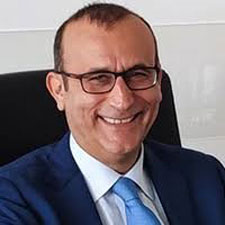
Dr. Valeria Vinci
Director of Division III – “Digital economy and new enabling technologies”, General Directorate for new enabling technologies, Ministry of Business and Made in Italy
Valeria Vinci is the Head of the Digital Economy and Enabling Technologies Unit at the Ministry of Enterprises and Made in Italy. Her unit is responsible for developing policies and projects aimed at promoting digital economy advancements and the adoption by enterprises of enabling technologies such as AI, IoT, blockchain, quantum technologies, and robotics. Additionally, the unit manages relationships with national, European, and international bodies.
Valeria Vinci’s diverse experience spans both the public and private sectors. A qualified lawyer, she provided legal advice on corporate governance, innovation, and related matters before transitioning to the public sector. In particular, as a former associate at top-tier law firms, she specialized in corporate law, assisting major corporations with complex international transactions and governance issues. She also served as a Legal and Policy Expert at a global trade organization, where she led policy initiatives on digital economy.
She has also an academic background: since 2021, she has co-directed an Executive Course in Tech Law at Luiss Guido Carli University in Rome, where she frequently teaches and lectures on EU law, tech law and regulatory innovation.