
December 2, 2024
Generally speaking, we don’t think much about radiological emergencies because we don’t often experience them in Canada. Should one happen though, the potential effects could be quite serious.
Radiological emergencies involve the release of radiation that can affect human health, the environment, and critical resources like water and food. While these situations are unlikely, their effects could range from health concerns like thyroid problems to potential contamination of drinking water or food supplies.
Fortunately, Health Canada is always ready to respond. That’s where Peter Wright and his dedicated team comes in. They are planning for the worst.
Embracing an always-ready mentality
“In Canada, we have strong systems in place to help us avoid radiological emergencies. They have multiple layers of protection and provide a solid front-line defense, ” explains Peter Wright, Head of Health Canada’s Coordination and Operations Preparedness Section of the Radiation Protection Bureau’s Nuclear Emergency Preparedness and Response Division.
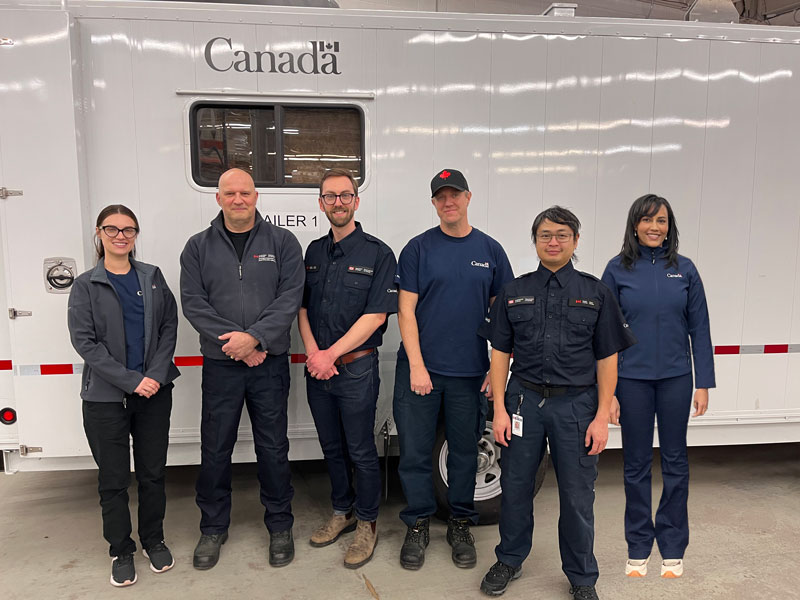
Health Canada’s Coordination and Operations Preparedness team of the Radiation Protection Bureau’s Nuclear Emergency Preparedness and Response Division. From left to right: Anastasia Chernykh, Stan Marciniak, Peter Wright, Richard Campbell, John Chin, Amal Malik
In the unlikely event of a nuclear or radiological emergency, Health Canada would monitor the environment and collect and analyse samples, and make recommendations to provincial and territorial authorities on actions they can take to protect the public and the environment. But here lies part of the problem: how do you prepare for an event that rarely, if ever, happens?
Practicing through exercises
To prepare for the unthinkable, Peter and his team regularly participate in simulations of radiological emergencies.
As Peter explains, “When we take part in these exercises, we’re doing everything we can to make sure the simulation is as real as possible. We take this extremely seriously. If something goes wrong in the simulation, we use that as a learning opportunity so we can be better prepared if a real emergency happened”.
A simulation means you need all the required equipment that you could use during a radiological incident. This includes radiation detection equipment, personal protective equipment (masks, gloves and protective suits), vehicles for mobile monitoring, tools to collect samples, and infrastructure for contamination control, such as large inflatable tents where you can screen for contamination and perform decontamination.
To carry all this equipment, Peter and his team bring an assortment of vehicles and trailers, including a mobile lab that can be used to analyze samples collected in the field. Having all the necessary equipment is important to conduct monitoring and collect samples while keeping Health Canada staff safe. But they aren’t the only people who need protection.
Helping first responders
“Planning for a radiological emergency means helping everyone prepare. Health Canada teams are always ready to act, but this is a joint effort. We have a responsibility to help first responders and emergency management teams so they can work safely,” explains Peter.
With that in mind, Peter and his team regularly offer trainings to first responders. By this stage, you might think that Peter and his team have enough on their plates, but the reality is they are always ready to lend a helping hand.
Offering expertise during large-scale events
Because big events bring together large crowds, authorities also plan for the worst-case scenario and you guessed it: that includes radiological emergencies!
Through an official agreement with the RCMP, Peter and his team offer radiological monitoring and support capabilities for these big events. In turn, the RCMP have provided on-site services for event such as the G7 meetings in Alberta and Quebec, as well as the Vancouver Olympics. This partnership ensures that the team is always ready for a range of important and high-stakes situations!
“Everything we do is in support of others. Whether we’re planning for emergencies, making recommendations to provinces and territories, training first responders or providing support for events, our mission is clear: make sure everyone is ready for something they’ve never dealt with,” says Peter.