
July 2, 2025
When you go grocery shopping these days, you may notice a new nutrition symbol on some packages featuring a magnifying glass and statements indicating that a product is high in saturated fat, sugars and/or sodium. This symbol helps you identify foods that are high in nutrients associated with an increased risk for chronic disease.
Although manufacturers have until January 1, 2026, to update their labels, some products already feature the new symbol.
You may be wondering, how did Health Canada come up with this concept? How do we know if it will make a difference? To answer these questions and more, we met with Scientific Project Coordinator Emily Chen.
High hopes for a new nutrition symbol
“Creating the new front-of-package (or ‘FOP’) nutrition symbol took a few years of work. When I started at Health Canada in 2016, work on the Healthy eating strategy was just beginning, which included FOP labelling. I’ve always been interested in food and healthy eating, as well as why people make the choices they do, so this was right up my alley!”
As one of her first big projects, Ms. Chen helped coordinate a study with 14 focus groups consisting of diverse participants across Canada. The objective was to gather preliminary feedback on an initial set of four designs, including symbol size and location on food packages. Focus group participants had three tasks to complete:
- Pick the healthiest choice among mock products labelled with different FOP symbols at various stations;
- Choose their preferred FOP symbol design and size and put it on the front of a cereal box where it would be easy to notice; and,
- Rank symbol designs based on how quickly and easily they were able to notice and understand them.
This study gave Ms. Chen and her colleagues valuable early feedback on the importance of using a symbol in a size that can be easily seen and in a consistent location, and helped pinpoint key design elements such as including the words “high in” and a visual icon to capture attention. In 2018, after extensive engagement with stakeholders, academia and other Government departments, the team proceeded with two additional studies.
A grocery story
This time around—and with a revised set of four symbol designs—Ms. Chen and her colleagues tested four format specifications for the FOP symbol: size, location, whether it should mention Health Canada, and its proximity to other nutrition information. They conducted an online study to assess whether the proposed specifications were needed to help consumers notice, understand and use the FOP symbol in making more informed food choices. They also evaluated the effectiveness of the FOP symbol. In a mock grocery store, participants of varying health literacy levels were randomly assigned to one of five groups (foods without an FOP symbol or foods with one of the four FOP symbol designs). They wore eye-tracking glasses and completed tasks such as “choose a cereal for your household,” “find a snack bar high in sugars” or “pick a yogurt for someone who wants to eat less saturated fat.”
Ms. Chen and her colleagues confirmed the importance of having a symbol that could be easily seen in a consistent location. Their findings also supported including “Health Canada” within the symbol to improve consumer trust and confirmed that the FOP symbol helped consumers to easily identify foods high in saturated fat, sugars, or sodium and to choose products lower in these nutrients. Based on these findings and stakeholder feedback, the FOP symbol that you see today was selected.
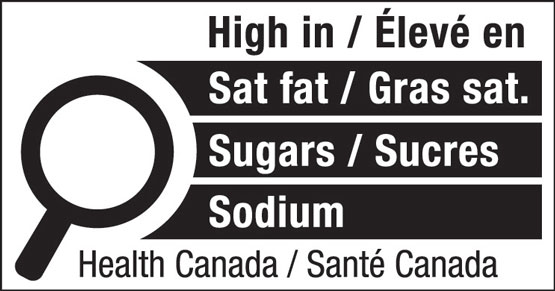
Figure 1. Example of the front-of-package nutrition symbol
Figure 1 - Text description
Shown here is a figure of a box in landscape format. The black and white symbol consists of a magnifying glass icon, and the following text: first line reads "High in / Élevé en;" second line reads "Sat fat / Gras sat;" third line reads “Sugars / Sucres;” and fourth line reads "Sodium." The words "Health Canada / Santé Canada" appear at the bottom of the box.
The power of knowledge
“Health Canada’s FOP nutrition labelling regulations are based on scientific evidence, consumer research, stakeholder consultations, and lessons learned from other countries. It's extra meaningful knowing that this symbol is grounded in studies with diverse consumers of varying health literacy levels and developed with everyday Canadians in mind,” says Ms. Chen. “The symbol may look simple, and that was the intent. It was designed to be clear and easy to use. It’s an effective tool to help consumers make informed decisions.”
The FOP symbol also complements other nutrition labelling tools like the Nutrition Facts table and List of ingredients on the back or side of the package.
Over the coming years, Health Canada will assess the implementation of the FOP nutrition symbol.
So next time you step in a grocery store, Ms. Chen says “keep an eye out for the new FOP symbol and use it to make an informed food choice for you and your loved ones!”
Are you interested in learning more about nutrition labelling? Consider registering for our Nutrition Labelling Online Course. This free and interactive course will help you better understand food labelling in Canada and includes a new module on the front-of-package nutrition symbol. Other modules touch on the nutrition facts table, serving size, % daily value, list of ingredients and nutrition claims. Register today!