

Yasmin Ali is Manager, Research & Innovation Advancement at the IWK Health Centre in Nova Scotia where she plays a key role facilitating the success of investigators and the reputation of research at the IWK. With 20+ years of experience in research administration, she possesses a wide-ranging perspective of the field. As manager, she is responsible for providing direction to a team of individuals overseeing many facets of research administration including contracts, grants management, finance, HR, ethics and research integrity, as well as focusing on strategic and policy projects involving research.
Prior to joining the IWK, Yasmin was the Research Officer for the Department of Medicine at Dalhousie University and held positions in administration, marketing and public relations. Yasmin holds a Master in Education, for which she received the Senate Award of Distinction, and degrees in Public Relations and Administration from Mount Saint Vincent University, and is certified as a Clinical Research Contract Professional. She is a member of the Canadian Association of Research Administrators (CARA), Vice-Chair, Continuing Education Program Advisory Committee for the Research Administration Certificate Program at Mohawk College and past Co-Chair of the Chebucto West Community Health Board, which served to advocate between communities and their provincial district health authority. In 2019, Yasmin was a recipient of a CIHR Travel Award to attend the 6th World Conference on Research Integrity in Hong Kong.

Dr. Geraldine Balzer is an Associate Professor of Curriculum Studies in the College of Education at the University of Saskatchewan. Her experiences teaching Inuit students led to her interest in decolonizing pedagogies and transformative education. Her teaching focuses on ways of disrupting the hegemony of standard English and embracing the diversity of Englishes within our world, incorporating Aboriginal and postcolonial literature into secondary classrooms, and preparing teachers to be advocates of social justice. Her research focuses on decolonization and social justice. She works with teachers to explore the use of diverse literary texts and literary theory in order to engage students in critical thinking about societal issues. She also studies International Experiential Education/Service Learning and its impact on Canadian participants and host communities in Central America. A central focus of this research is to ensure that Indigenous host communities in the Global South have voice in the development and implementation of these programs. Reciprocity is central to developing research that is not an extractive industry but is co-owned by the researchers and the communities.
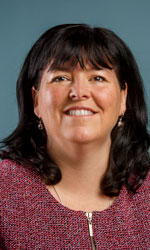
Ms. Lyne Bouret has primarily built her career in higher education, specifically at Concordia University, where she has held several key positions. She has notably served as Director of Accounting and Research Services, Interim University Controller, Director of Financial Operations and Information Systems Services, as well as Executive Director of the Center of Expertise. Since October 2024, she has held the position of Associate Vice-President of Finance and Controller.
Lyne holds a bachelor's degree from École des hautes études commerciales de Montréal. As a Certified Public Accountant, she is a member of the Order of Chartered Accountants of Quebec. In her current role, she is responsible for the major financial reporting of Concordia University, including operational funds and research funds.
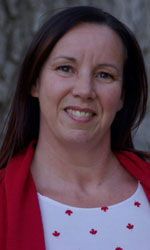
Deirdre Coburn, MSc leads with authenticity, integrity, and a commitment to equity in her role as Graduate Funding Facilitator at the University of Lethbridge. She builds inclusive funding practices by piloting targeted workshops for underrepresented students, streamlining scholarship processes to improve accessibility, and advocating for structural changes that reduce administrative barriers.
Deirdre independently manages the full lifecycle of graduate student funding—from policy development and adjudication to fiscal reporting and stakeholder engagement. With over two decades of experience in funding administration and strategic oversight, she drives initiatives that enhance student success and institutional effectiveness. With Deirdre's leadership, an online scholarship application system was implemented, streamlining award processes and improving award outcomes.
She serves as the university’s Scholarship Liaison Officer, representing the institution on national and provincial committees such as TriCouncil and Alberta Innovates. Her leadership in this role ensures compliance, transparency, and strategic alignment with funding bodies. Deirdre continues to expand her impact through continual development that includes certifications in project management, emotional intelligence, conflict resolution, and leadership programs such as Dare to Lead™, and pursuing a Project Management Professional (PMP) designation. She actively shapes inclusive, efficient, and student-centered funding environments that elevate both individuals and institutions.
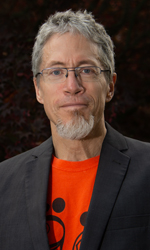
Dr. Trevor Davis an 18-year veteran of research administration, is SFU’s Executive Director, Research Operations, responsible for all central research support offices, human ethics, tech transfer, and all core facilities. His mandate for the past four years has been to modernize the structure, processes, and software for research support at SFU, to embed a service culture, and to build bridges with Faculties.
Trevor has extensive experience in the design, development, operation and executive sponsorship of research management software, and is currently heavily engaged in such work as sponsor for SFU’s Research Enterprise System procurement project. In this capacity he has spoken directly with every academic department at the University regarding their specific requirements for these systems. His work has also put him in touch with universities across the country, discussing concerns about their choices for software and plans for the future.
With an academic background in spatial database research and development, as well as private sector work in IT, Trevor has a very thorough and current understanding of the research admin software ecosystem, both in Canada and abroad. He has led both development projects and the procurement of research administration software at several other universities, prior to taking on this role at SFU.
Trevor’s particular focus is the integration of systems. His involvement with ORCID – originally in setting up the Canadian consortium, and now on the ORCID-CA Advisory Committee, has also involved outreach to the research admin community. As a former CARA executive member, he has represented ‘the university sector’ on committees such as the Canadian Research Integrity Forum, which assisted in developing the Framework on RCR. He has investigated and published on integration frameworks, such as the VIVO ontology and other open standards.
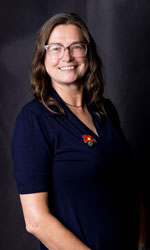
Annemieke Farenhorst is the Associate Vice-President (Research) at the University of Manitoba. She is a Full Professor of Soil Science and a Registered Professional Agrologist. Annemieke holds a doctoral degree in Geography from the University of Toronto, and a doctorandus degree in Physical Geography and Soil Science from the University of Amsterdam.
Annemieke has supervised more than 100 natural and social science trainees. Her research program focuses on the fate of organic chemicals such as pesticides and antimicrobials in soil and water, and on community-based collaborations for strengthening human and ecosystem health. Annemieke has led large networks to advance food security in Central America, and since 2011, has been active in research and outreach partnerships with First Nations. Attesting to her international stature in her discipline, Annemieke is the President of the International Union of Pure and Applied Chemistry Division VI (Chemistry and the Environment).
Annemieke served as the Prairie NSERC Chair for Women in Science and Engineering from 2011-2020. The Chair program raised the level of participation of women as students and professionals and strengthened the recruitment and retention of Indigenous students in university programs. Annemieke also led workplace climate surveys at 21 Canadian universities and this work is recognized to be among the most comprehensive current data available on gendered challenges at Canadian universities.
Annemieke has been recognized for her professional contributions through a range of awards including the Women’s Executive Network Canada’s Most Powerful Women: Top 100 Award, and the Queen Elizabeth II Diamond Jubilee Medal.
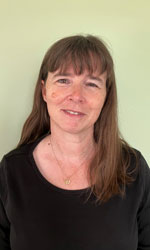
Andrea Fowler has been working in Research Finance for 26 years. She started out as the administrator for all of Carleton University’s NSERC grants in 1998. After a maternity leave in 2003, she began dealing with all CIHR and SSHRC grants. From 2006-2009, Andrea took a leave of absence to serve as the financial administrator for the SNOLAB project in the Physics department, which was mainly funded by the CFI. Since 2014, she has been the Assistant Director, Research Financial Services at Carleton.
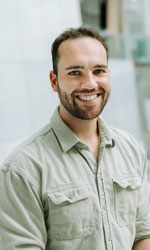
Photo credit: Valerie Paquette
Félix Giroux is an Assistant Professor at the Université Laval’s Faculty of Business Administration and is passionate about issues that have significant social impact. In a world where technological advancements constantly redefine our daily lives, he wants to ensure that these changes benefit society as a whole, especially populations that are often marginalized. Félix also strives to promote inclusive, sustainable and equitable IT development, fostering a technological ecosystem that respects both people and the environment. His research takes a multifaceted approach, ranging from laboratory experiments with analyses of neurophysiological signals to purely qualitative studies. He is currently interested in inclusive IT design practices for users with disabilities, as well as digital rehabilitation following a stroke. In his research, he has the opportunity to work closely with Desjardins on a project on inclusive design practices, and with a research group in clinical neuroscience at the University of Oxford on a series of digital rehabilitation projects.
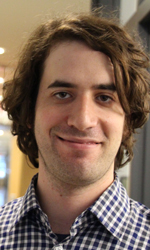
Michael Hoffman creates predictive computational models to understand interactions between genome, epigenome, and phenotype in human cancers. He implemented the genome annotation method Segway, which simplifies interpretation of large multivariate genomic datasets, and was a linchpin of the NIH ENCODE Project analysis. He is a principal investigator at Princess Margaret Cancer Centre and Associate Professor in the Departments of Medical Biophysics and Computer Science, University of Toronto. He was named a CIHR New Investigator and has received several awards for his academic work, including the NIH K99/R00 Pathway to Independence Award, and the Ontario Early Researcher Award.
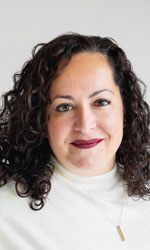
Recognized for her deep collaboration across academia, industry and community, Dr. Krista Holmes leads research and innovation at George Brown College, one of Canada’s most culturally diverse urban post-secondary institutions. With a focus on inclusive excellence, quality improvement and evidence-informed decision-making, Krista guides a large multi-disciplinary team to deliver complex projects that are positively impacting Canadian businesses and communities. She has extensive experience in research ethics and actively engages in policy and advocacy initiatives to ensure high standards in responsible conduct of research, research governance, and research administration. Committed to equity and justice, Krista leads transformative initiatives in postsecondary education by providing opportunities for students, employees and partners to thrive in inclusive and supportive academic environments.
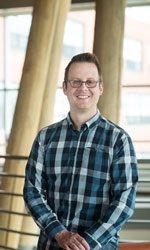
Francis Lévesque is a professor at the School of Indigenous Studies at the Université du Québec en Abitibi-Témiscamingue. An anthropologist and ethnohistorian, he is interested in the colonial history of the Canadian Arctic and Indigenous oral traditions. Since 2000, he has collaborated with the Inuit of Nunavut on various research projects, notably concerning the culling of Inuit sled dogs on Baffin Island and in Nunavik during the 1950s and 1960s. His work led him to contribute to the Qikiqtani Truth Commission, established by the Inuit of Baffin Island to, among other things, document this issue. He has also studied contemporary relationships between humans and dogs in Iqaluit and Cambridge Bay, Nunavut, as well as in Kuujjuaq, Nunavik. This project allowed him to work closely with veterinarians and epidemiologists who also have an interest in Arctic dogs. Additionally, he has conducted research on the effects of mining development on northern communities, on post-secondary education in Indigenous contexts, on the integration of Inuit traditional knowledge (inuit qaujimajatuqangit) into governmental structures in Nunavut, and on the history of environmental research in eastern Ungava Bay. He is currently developing a partnership with Minwashin, an Anishinabe organization, with the aim of establishing a project to highlight their historical heritage.

Dr. Hector MacIntyre is currently Manager of the Postdoctoral Office at the University of Calgary and a member of the board of directors of the Canadian Association of Postdoctoral Administrators. Over the past decade he has worked in several research administration roles with progressive leadership. In his current role, he supports teams who manage and administer research training awards including undergraduate studentships, postdoctoral and clinical fellowships, and partnered internships. He is proud of his team’s achievements in championing the research contributions of students, postdocs, and early career scholars from all backgrounds. He holds a BA (Hons.) and MA in philosophy from the University of Alberta, and a Ph.D. in philosophy from the University of Ottawa, where his dissertation investigated technology change and artifact evolution. In his spare time, he enjoys photography, traveling, cinema, and podcasts.
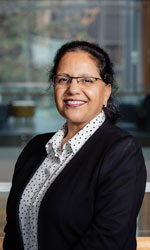
Anita Sharma, Ph.D., is the Director of Research Services at Thompson Rivers University in Kamloops, BC. With over a decade of experience, she spearheads strategic initiatives in research services, program development, and researcher engagement. Her portfolio includes managing Tri-Agency Institutional programs, directing grant facilitation services, and administering internal funding awards while building a research culture of excellence.
Anita has contributed to the regional and national research landscape through her roles on key external advisory bodies such as the Alliance of Canadian Comprehensive Research Universities Tri-Agency Funding Advisory Committee, the TGMS External Change Agent Network, the BC Knowledge Development Fund Working Group, and the BCNET electronic research administration system Procurement Working Group. She remains deeply engaged in research administration communities as an active member of the Canadian Association of Research Administrators, the Society of Research Administrators International (SRAI), and the National Organization of Research Development Professionals. Through her service on the SRAI Diversity, Equity, and Inclusion Committee, Anita champions inclusivity and knowledge-sharing.
As a scholar with a Ph.D. in Biochemistry, Anita has published 28 articles in refereed scientific journals. In research administration, she shares her expertise through various platforms, including publishing in refereed journals, writing blog posts, delivering conference presentations, and serving as a co-editor for the SRAI Catalyst newsletter.
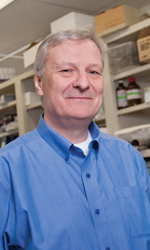
Jim Woodgett is President and Scientific Director of the Terry Fox Research Institute, Senior Investigator at the Lunenfeld-Tanenbaum Research Institute (LTRI) at Sinai Health and Professor in the Department of Medical Biophysics, University of Toronto. He received his Ph.D. in biochemistry in 1984 from the University of Dundee and then pursued postdoctoral research at the Salk Institute. He then set up a research group at the Ludwig Institute for Cancer Research at the Middlesex Hospital, London where he isolated and characterized the genes for several key cellular regulators including Glycogen Synthase Kinase-3 (GSK3), Protein Kinase B/Akt and the Stress-Activated Protein Kinases (JNKs). In 1992 he moved to the Ontario Cancer Institute in Toronto where his lab focused on the signal transduction mechanisms underscoring malignant growth, degenerative diseases and diabetes. Dr. Woodgett is a Fellow of the Royal Society of Canada, was a Howard Hughes Medical Institute International Scholar as well as an MRC Scientist and CIHR Senior Investigator. He was an inaugural member of the Advisory Board for the Institute of Cancer Research (CIHR) and has served as member or chair of a multitude of grant panels in Canada and internationally as well as the Director of Research at LTRI from 2005-2021. Of his 300+ publications to date, many relate to the biology and functions of GSK3 and date back to the last chapter of his thesis, highlighting long timelines associated with pursuit of fundamental biological science.