
Growing up is hard to do: Chemical exposure and teenagers
December 20, 2021

A global trend is emerging in teenagers that’s both cause for concern and piquing the interest of researchers: they’re going through puberty at a younger age, especially girls.
Tic Tac Tot: Examining chemicals exposure in preschoolers
December 13, 2021

Researchers from the Maternal-Infant Research on Environmental Chemicals (MIREC) team have looked at whether exposure to certain chemicals during pregnancy could have an impact on children’s early development.
Math saves lives: How scientists use modelling to guide COVID-19 decision-making
December 10, 2021

For those of us who struggled through high school math classes, it’s hard to imagine it could actually be used to save lives! But that is exactly what scientists at the Public Health Agency of Canada’s (PHAC) National Microbiology Laboratory (NML) are doing—using data analysis to create forecasts based on mathematical models.
Bringing baby home
December 6, 2021

Why are some babies smaller than others while they are growing inside their mother, or have a lower birth weight?
Researchers from the Maternal-Infant Research on Environmental Chemicals (MIREC) are examining links between chemical exposure and how it may impact babies at birth.
Here we grow again: How Health Canada researchers are learning more about chemical exposure during pregnancy
November 29, 2021

Pregnancy is a unique time in a family’s life, both for the expecting parents and their growing baby. Researchers from the Maternal-Infant Research on Environmental Chemicals (MIREC) team are studying how environmental factors impact mothers throughout pregnancy and for the rest of their lives.
Growing Knowledge: How Health Canada is going the distance to study human impacts of chemical exposure
November 19, 2021
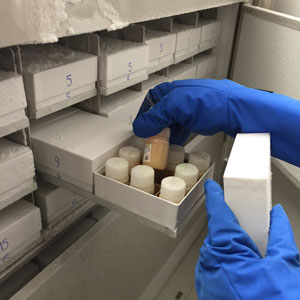
Since 2007, a team of scientists at Health Canada, have been working on an ambitious, multi-year study of environmental chemicals and their possible health effects on mothers, starting during pregnancy and throughout childhood development, from infancy to adolescence.
Group A Strep: unravelling the mysteries of a common germ
November 18, 2021
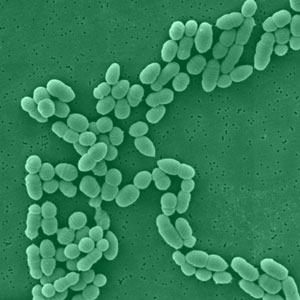
Have you ever been worried that you had strep throat? Maybe you had to miss school, or cancel a date, and go see the doctor. You might have wondered how you got sick and whether you could pass your illness on to others. The Public Health Agency of Canada (PHAC)’s National Microbiology Laboratory (NML) is working to answer these questions by tracking and analyzing Group A Strep infections to understand how the disease is changing and how best to support regional labs during outbreaks.
Turning the page on Radon: Radon Monitor Library Lending Program
November 1, 2021
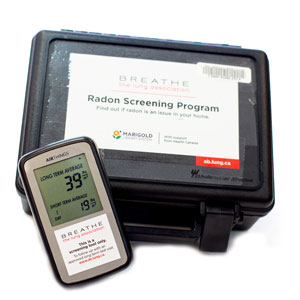
When we think of our public library, we think of rows and rows of books. However, libraries are much more; they are a central point of information sharing, a hub of knowledge and a pillar of support in communities. Sharing knowledge and responding to local need is how libraries across Canada got involved in the Radon Monitor Library Lending Program.
Unravelling the mystery of food-borne illness outbreaks: Disease detectives search for clues in the data
October 29, 2021

At the Public Health Agency of Canada (PHAC), epidemiologists play an important role in protecting the health of Canadians as they study patterns of disease so they can understand what causes an illness and how best to prevent it.
Breathing easy in port cities: reducing the impact of marine shipping pollution?
October 29, 2021

We all know that road traffic is a source of air pollution, but it’s easy to forget that highways are not the only place we can see traffic. Large marine vessels contribute to air pollution in the port cities they visit on their shipping routes.
Can you stand the heat?
July 29, 2021
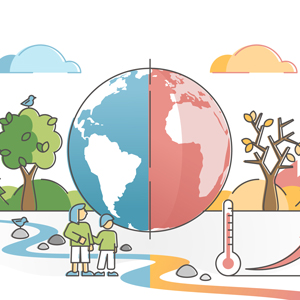
Climate change is one of the most significant global health concerns of the 21st century. In Canada, our average land temperature has risen 1.7°C since 1948, and if no action is taken, it’s expected to increase by about 5.44°C in major cities by the end of the century.
COVID-19: Examining the National Microbiology Laboratory’s Role in Serology Testing
July 6, 2021
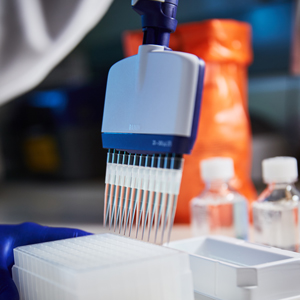
Many Canadians wonder if the sniffles and sore throat they had in 2020 or 2021 was a simple head cold or COVID-19.
Is there a monster under the bed?
June 21, 2021
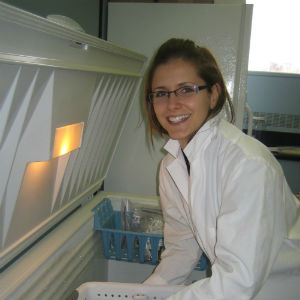
The far corner under the bed may be one of the safest places in most homes for house dust to hang out. But still, it was not safe from Health Canada researchers who wanted to know what’s in dust anyway?
Point-of-care testing brings rapid COVID-19 testing to underserved communities
June 17, 2021

When hit with a pandemic such as COVID-19, northern, remote and isolated communities in Canada can be particularly vulnerable. These communities are home to many First Nations, Metis and Inuit peoples who have historically experienced obstacles and challenges with equitable access to health care services.
Why there’s no monkeying around on extreme heat
June 15, 2021

When Karina Richters realized that extreme heat was increasingly impacting the safety of her two children on trips to the playground, she set out to find a solution.
Brand new research for brand new food environments
June 7, 2021

What we eat and the way we prepare our foods is constantly evolving. Over the past few years, you may have discovered some new foods in your grocery store, like new frozen desserts. Or, you may have started using new cooking tools, like an air fryer, to cook your kids’ favourite chicken fingers.
Staying close to home: Impact of public health measures on air pollution
June 2, 2021

For those living in large urban centres, sitting in bumper-to-bumper traffic used to be part of the daily grind. But since the COVID-19 pandemic forced many people to telework, traffic patterns have changed drastically. Has this had an impact on the air quality and air pollution in our cities? Scientists Keith Van Ryswyk and Eric Lavigne from Health Canada set out to find out!
A National Collaboration Resource for Public Health
June 1, 2021

As Canadian public health experts continue to adapt and respond during the COVID-19 pandemic, the importance of established partnerships in public health has never been clearer. These experts coordinate to share knowledge and support each other so that they can continue producing the best science for Canadians and remain research leaders in the world.
Harnessing the power of wastewater testing to detect COVID-19 outbreaks
May 20, 2021
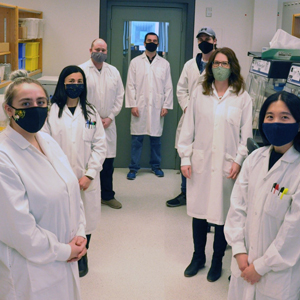
Scientists at the Public Health Agency of Canada (PHAC) are expanding the frontiers of public health surveillance using advanced techniques to detect COVID-19 in communities across Canada through wastewater analysis.
The Deets on DEET: What parents should know about Health Canada’s latest research on insect repellents for kids
May 18, 2021

For many of us, summer means making the most of our great Canadian landscape. Trips to the beach, picnics, backyard barbecues, hiking trails, and children’s summer camps are great ways to enjoy the best of our weather and our wonderful natural resources. However you enjoy the great outdoors, there’s a good chance you use bug spray to cope with those tiny unwanted guests who show up to spoil the fun. The only thing that ruins a barbecue faster than rain is a swarm of mosquitoes!
The Q&A of QA: how the NML uses Quality Assurance to produce quality research
March 15, 2021
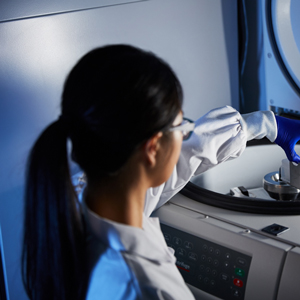
Running a world-class research facility involves a lot of precision and expertise. Have you ever wondered how facilities like the Public Health Agency of Canada’s (PHAC) National Microbiology Laboratory (NML) produce trusted work? The answer lies in part with the brilliant scientists who conduct the research, but also relies on a team of expert support staff who maintain a workplace with strict technical measures at every turn to ensure a quality outcome
Big questions about tiny particles
March 8, 2021

Understanding the effects of new products and technologies is increasingly important in our fast-paced world. By understanding the potential health impacts of new products, research scientist provide guidance on ways to use them safely, resulting in policies, regulations and guidelines that weigh risks and benefits of all kinds of innovations.
Motivation, Aspiration, Inspiration of an Inquisitive Mind – Dr. Violina Lozeva-Thomas
March 1, 2021

Dr. Lozeva-Thomas comes from a family of smart, strong, independent, well-educated women. They helped shape her life (and her inquisitive mind) from an early age. She always knew that she wanted to enter the medical profession in order to help people overcome their illnesses. What she didn’t know was how far that dream would take her — and that the different paths she would follow would lead her to where she is right here, right now.
Translating knowledge into action: Understanding the health effects of industrial air pollution
February 24, 2021

Industrial emissions, or pollutants released into the atmosphere from industrial activities, contribute to local and regional air pollution. In fact, major industries, such as petroleum refineries, power plants, metal smelters and pulp and paper mills are significant emitters of three of the most common outdoor air pollutants particulate matter, sulfur oxides and nitrogen oxides.
On the Road to a Healthier and Safer Future: NML’s Work on COVID-19 Vaccines
February 17, 2021
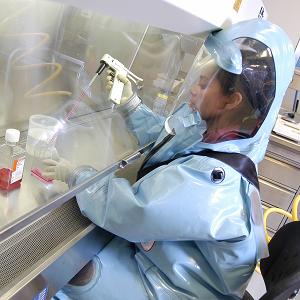
In line with ongoing global efforts to combat the pandemic, scientists at the Public Health Agency of Canada’s (PHAC) National Microbiology Laboratory (NML) are working tirelessly to develop new and improved vaccines for COVID-19 and its variants in the upcoming years.
Defying the Odds, Making an Impact - Dr. Neda Nasheri
February 17, 2021

As a child, Dr. Neda Nasheri felt drawn to making a positive impact on the lives of others. However, the odds were stacked against her.
Despite the fact that her educational pursuits were encouraged by her family, the political situation in her country, her gender and her religion meant that she was denied higher education. Not one to back down from adversity, Dr. Nasheri found a way to achieve her undergraduate degree at a specialized private university, which led her to an academic career in sciences and, ultimately, to her work at Health Canada.
Making sense of the numbers: Air Health Trend Indicator
February 10, 2021

Daily exposure to air pollution can affect our health, potentially leading to chronic lung disease, heart attacks, strokes, and even death. Health Canada Research Scientist Dr. Hwashin H. Shin uses her expertise in mathematics and statistics to better understand the link between air quality and the health of Canadians.
It Starts with the Youth: Improving Sexual Health Care in Canada
February 10, 2021
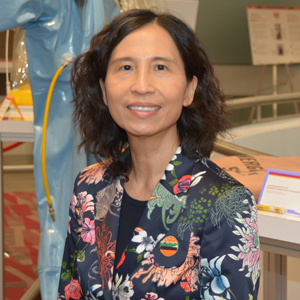
It is no secret that the ongoing COVID-19 pandemic has had a major impact on youth in Canada. As I have highlighted in my latest annual report, school closures, increased unemployment, limited access to services, and prolonged physical distancing measures have meant that youth have experienced isolation, mental health challenges, and potentially unsafe home environments.
Cracking the COVID-19 Code
January 18, 2021

Over the past few decades, advancements in science have greatly improved the methods that are used to study infectious diseases. One of the most powerful of these advancements is genomics – studying infectious diseases on a deeper genetic level to uncover pathogens or “blueprints” of a virus.
How safe is the air you breathe?
January 13, 2021
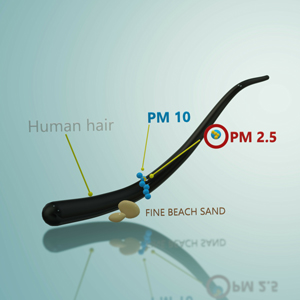
It can be easy to take for granted that the air we breathe is healthy. Dr. Scott Weichenthal, a Research Scientist at Health Canada and Assistant Professor in the Faculty of Medicine at McGill University, is examining the content of the air we breathe in several cities across Canada. His research seeks to understand the short and long-term health effects of exposure to specific types of airborne particles found in air pollution.